




What are the significance of “Lajjabostro” in a Bengali Wedding?

*1. Meaning of Lajjabostro*
“Lajja” means modesty or shyness; “Bostro” means cloth. A cloth symbolizing the bride’s modesty and purity.
*2. Part of the Sampradan Ritual*
During Sampradan, one of the core rituals in a Bengali wedding. The bride’s father or a guardian gives the bride away to the groom. Lajjabostro’s Role: A new saree or a special cloth (usually red or yellow) is placed over the bride’s head and shoulders, handed over to the groom.
*3. Symbol of New Beginnings*
Represents the bride’s transition from her paternal home to her new life with the groom. It is gifted by the groom’s family, signifying acceptance and union.
*4. Expression of Modesty and Shyness*
The act of covering the bride with the Lajjabostro reflects traditional values of humility, respect, and modesty, expected of a newlywed bride.
*5. Spiritual & Emotional Significance*
Symbolizes the blessing of elders and the sacred bond formed through marriage. Acts as a protective covering, aligning with the idea of spiritual purity and sanctity during the wedding rituals.
*6. Unity of the Couple*
Often, the Lajjabostro is tied with the groom’s attire (usually with his uttariya or panjabi), representing the eternal bond and unity of the couple. This knot remains tied until the completion of the ceremony.
*7. Cultural Continuity*
A deeply rooted custom passed down through generations, preserving Bengali traditions and identity in weddings.
The bride is carried (often by brothers or male relatives) seated on a pidi and is rotated seven times (saat paak) around the groom. After that, shubho drishti bride and groom look into each other’s eyes.
*9. Mala Bodol*
They exchange flower garlands(mala) three times as a symbolic acceptance of each other.
*10. Sampradan*
The bride’s father (or guardian) gives her hand to the groom’s, symbolically transferring responsibility. A sacred thread is tied between them, and a priest recites mantras.
*11. Yagna and Sindoor Daan*
A sacred fire (yagna) is lit, and the couple chants vows with the priest. The groom applies sindoor to the bride’s hair parting.
*Late Night: Post-Wedding Rituals*
*12. Bashor Ghor/Bashor Raat*: Friends and cousins stay up teasing the couple with fun games and songs. In traditional settings, the bride and groom don’t sleep that night.
*13. Bidaai (Farewell to the Bride)*:
This emotional ritual marks the bride’s departure from her maternal home. The bride throws rice or puffed rice behind her, signifying repayment of parental love and care. Her family blesses her and sends her off in a car with the groom’s family.
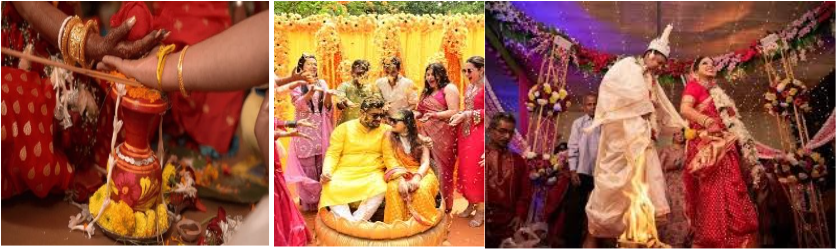
Rituals glimpse of bengali wedding
The bride wears shankha (white conch shell bangles) and pola (red coral bangles) – symbols of married life, typically put on by a married woman in the family.
Briddhi Ritual:
Briddhi is a pre-wedding ancestral worship ritual performed separately by the bride’s and groom’s families, usually the day before the wedding.
“Morning Rituals”
1. Gaye Holud:
Time: Morning or late morning
Participants: Bride’s family and close friends
Turmeric paste (gaye holud) mixed with mustard oil is applied to the bride’s face and body. Traditionally, this turmeric is brought from the groom’s side, along with gifts and a decorated fish (symbolic). The bride is seated on a piri (wooden stool) covered with an alpana (ritual design). Family members smear the paste one by one while blessing her.
2. Snan:
After haldi, the bride is bathed in holy water, usually collected from a nearby river or pond, to purify her before the wedding.
Midday: Pre-Wedding Meals & Preparations:
4. Light Meal for the Bride
The bride eats a vegetarian meal prepared by her mother or elder women. Post this meal, she usually fasts until the wedding rituals are completed.
5. Bridal Dressing
The bride is adorned in her wedding saree (usually Banarasi or Korial), with gold jewelry, alta on her feet, and elaborate makeup. Her hair is styled, and she wears a mukut (headgear) and veil. A kajol-lata/gachkouto is kept with her to ward off evil spirits.
6. Reception of Groom’s Party
The groom’s procession arrives with music and fanfare. The bride’s family welcomes the groom (bor) at the entrance with an aarti, conch blowing, and sprinkling of rice.
The groom is offered sweets and water and escorted inside with respect.
Evening: Main Wedding Rituals:
7. Bar Baron (Welcoming the Groom)
The bride’s mother performs aarti and receives the groom.
He is then led to the wedding mandap or chadnatolla (sacred altar).
8. Saat Paak & Shubho Drishti