Items: Earthen Lamps (Diyas): Used for lighting during various rituals.
Incense (Agarbatti, Dhoop, Dhoona): For offering prayers and creating a sacred atmosphere.
Ghee: Clarified butter, essential for the hawan (fire ritual).
Coconut: A symbol of good luck and prosperity.
Cotton Wick: For the lamps.
Aalta (Red Lac Dye): Applied on the bride’s hands and feet.
Sindoor (Vermillion): Used to fill the parting of the bride’s hair.
Gangajal (Holy Water): From the Ganges River, used for purification.
Ganga Mati (Holy Mud): From the Ganges, used for purification.
Dhunochi: An incense burner.
Kush: Sacred grass used in rituals.
Betel Leaves and Nuts: Used in various rituals, often offered as part of blessings.
Turmeric: Used in the Gaye Holud (turmeric paste) ceremony.
Mustard Oil: Used in the Gaye Holud.
Husked Rice: Used in blessings.
Treifol Leaves: Used in blessings.
Dhan (Unbroken Rice): Used in blessings.
2. Utensils:
Brass, Copper, and Kaansa Utensils. Used for various rituals and offerings.
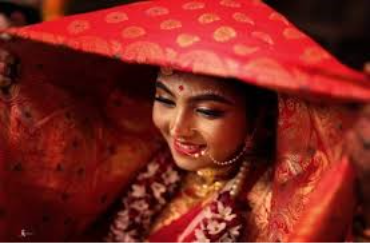
The Lajjabostro is more than just a piece of cloth-it holds “symbolic, emotional, spiritual, and cultural importance in a Bengali wedding. It honors the bride’s modesty, marks the transition into her new life, and celebrates the sacred “union of two souls in a traditional and meaningful” way.