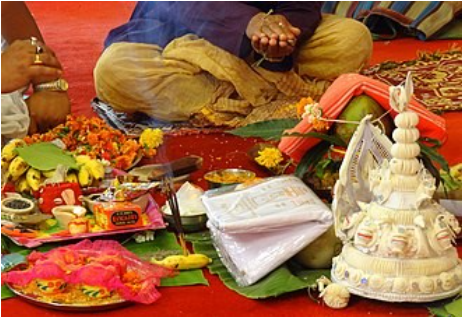
in a traditional Bengali Hindu wedding, the ritual where the bride’s family changes the groom’s attire holds deep symbolic and cultural significance. This ritual is typically part of the “Saat Paak” and “Mala Bodol” segment or sometimes takes place during a pre-wedding or wedding-day ritual depending on the specific regional or family customs.
Here’s why this ritual is done:
Symbolism Behind Changing the Groom’s Attire by the Bride’s Family:
*Formal Acceptance Into the Bride’s Family:*
Changing the groom’s clothes symbolizes his transition from being an outsider to becoming a part of the bride’s family. It marks the family’s acceptance of him as their own, and they welcome him with new garments.
*Purification & New Beginnings:*
Just like the bride wears new attire, the groom is also given fresh clothes as a sign of starting a new phase of life. The change of clothes symbolizes purification, shedding the past, and embracing marital responsibilities.
*Offering of Respect and Honor:*
The act of offering new clothes (often a traditional dhoti or kurta with a topor) is a sign of respect and honor from the bride’s family. It’s a form of hospitality-dressing the groom in fine clothing reflects the family’s joy and the importance of the occasion.
*Traditional and Ritualistic Roles:*
In Hindu marriages, symbolic acts like changing clothes often accompany important transitions (e.g.. from bachelorhood to marital life. In some rituals like Adhibas Tatva, the bride’s family sends gifts, including clothes for the groom, before the wedding.
*What Kind of Attire Is Given?*
Typically, the groom is given:
*.*A silk dhoti and kurta or Punjabi.
*.* Topor
This ritual, while deeply symbolic, also serves a practical role in the ceremony and is a way of tying both families together in mutual respect and celebration.*
Changing the groom’s attire by the bride’s family