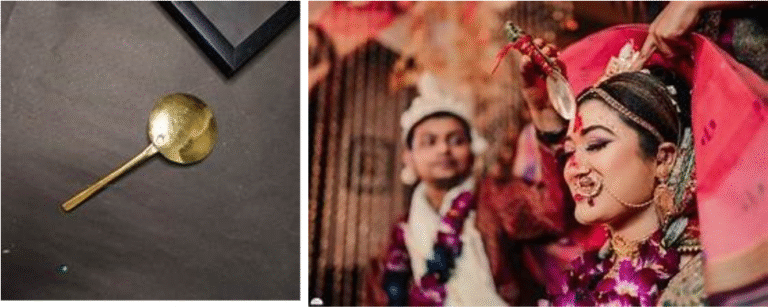
“Maintains Ritual Modesty”
Traditionally, the bride keeps her head bowed down and eyes closed during the sindoor daan. The groom uses a “darpan so he can correctly apply the sindoor to her maang without her raising her face, preserving shyness and modesty.
*1. Symbolic First Look-The groom sees the bride’s face for the first time through a darpan (mirror) during the Subho Drishti or Sampradan ritual it represents a pure and spiritual connection. avoiding direct physical contact and focusing on emotional bonding first.
*2. Sacredness and Shyness Preserved – The mirror acts as a cultural bridge-maintaining the sanctity and modesty of the bride, while still initiating the couple’s spiritual connection.
*3. Mirror as a Witness – In ancient customs, the darpan symbolized a witness to truth. By seeing each other through it, the mirror becomes a silent divine witness to their union.
*4. Transition from Reflection to Reality – The mirror symbolizes the reflection of self and the transformation from individual identity to marital unity. It metaphorically shows how two souls will soon see their true selves in each other.
*Historical Roots of Using Darpan*
1. Vedic Symbolism
In Vedic rituals, mirrors were seen as tools of clarity, truth, and soul reflection. Ancient texts speak of darpan as an item used in spiritual introspection and marriage rites.
2. Royal Traditions
In medieval Bengali and Indian royal weddings, mirrors were used for the bride and groom to see each other formally and ritually, often with symbolic gestures of modesty and grace.
The darpan in a Bengali wedding is not just a mirror, but a symbol of reflection, union, purity, and timeless tradition. It connects the modern couple to centuries of heritage, while gently guiding them into the sanctity of marriage.
Darpan for sindoor daan ritual